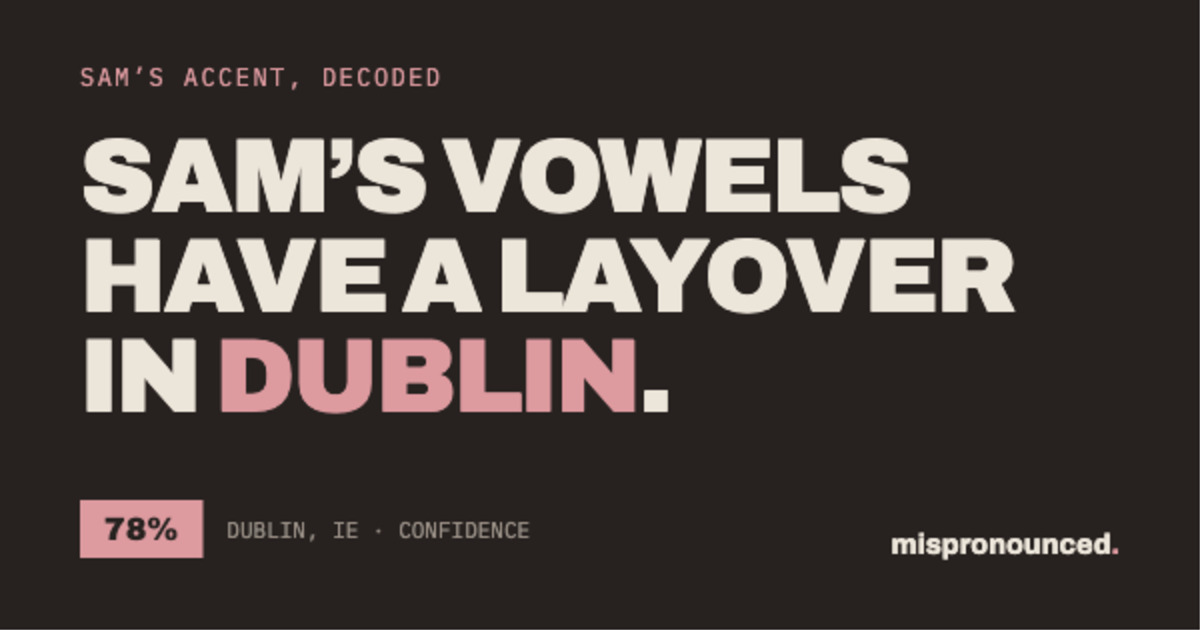
Read one short paragraph into your phone. An AI phonetician breaks down your accent — region, blend, and the exact words that gave you away.
You record two short clips — a diagnostic reading passage and a spontaneous answer — and an AI dialect coach writes you a genuine breakdown: where your accent is from, what it's blended with, and the specific words and sounds that gave you away.
It's part linguistics, part party trick. The report is written to be playful — it doesn't just classify you, it tells you a story about how you talk.
The pipeline is the fun part. It runs in two passes: first a model listens to your audio free-form and writes a "phonetician's notebook," then a second, text-only pass turns that notebook into a structured, shareable result.
That split matters — I found that forcing a rigid output schema onto the listening step measurably degrades how well the model hears. Let it listen loosely, then structure it after.
A scripted passage plus an off-the-cuff answer, recorded right in the browser — no upload, no setup.
Listen first, structure second. A free-form "notebook" pass, then a schema pass that turns it into the report.
Every analysis gets an anonymous share link, so you can send your accent breakdown to the group chat.
This one started as a curiosity about the edges of what these models can do with raw audio. The surprise wasn't that it worked — it was how much the prompt structure mattered. Ask it to fill in a form while listening and it goes deaf; let it ramble in a notebook first and it hears everything.
It's the smallest app on this page and probably the most fun to show someone. Everyone wants to know what their voice says about them. Read the paragraph. Find out.
Public app — sign in with Google, allow the mic, and you're off. Results are never locked; there's a tip jar if you like it, but no paywall on your own report.