Upload a few selfies. An AI stylist reads your coloring, places you in the 12-season system, and paints you a palette — then generates photos of you wearing it.
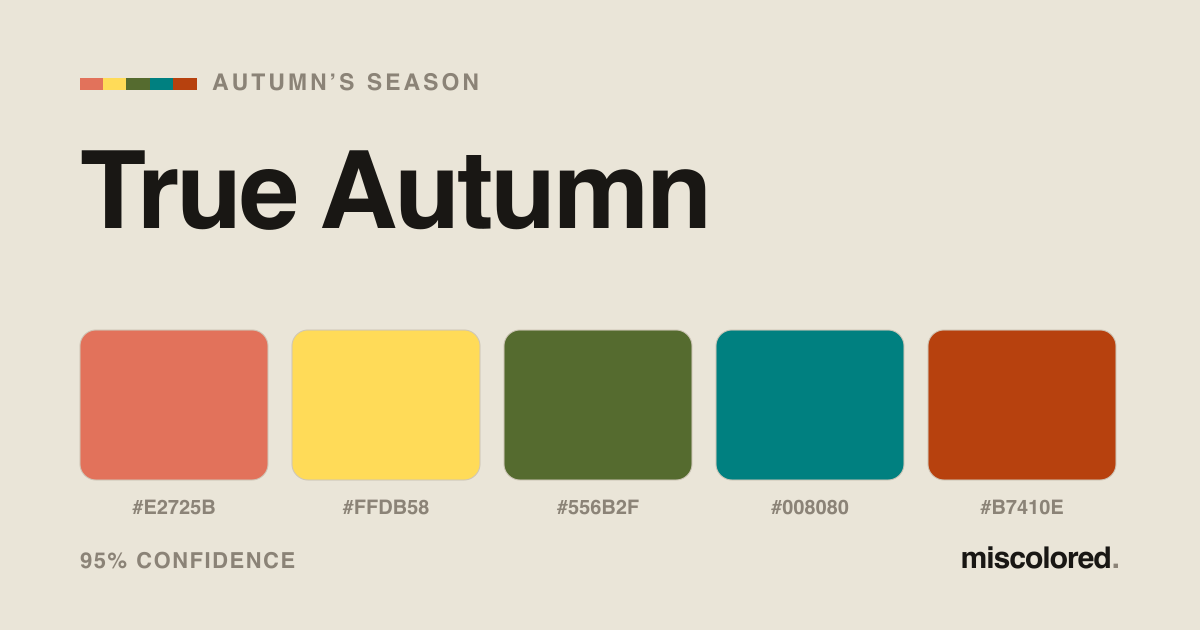
"Getting your colors done" is a real thing stylists charge hundreds for — sit under neutral light, drape fabrics against your face, and figure out which season you are. Miscolored does it from a few selfies: it reads your skin, hair, and eye coloring and places you in the 12-season system, then hands back your best colors, the ones to avoid, your metals, your neutrals, and your palette twins.
The finish is the fun part — it generates a handful of AI photos of you dressed in your palette (and a couple deliberately clashing, so the difference is obvious). It's a mobile web app: Google sign-in, and every result has an anonymous share link. It's the color-theory cousin of Mispronounced.
Under the surface it's the same three-pass idea I keep coming back to with these models. First a LOOK pass studies your photos free-form. Then a STRUCTURE pass turns that reading into a strict result — season, hexes, confidence. Then a RENDER pass generates the try-on images.
Splitting "perceive" from "format" matters: ask a model to judge your undertone and fill in a rigid schema at once and it gets worse at both. Let it look first, structure second, and the analysis holds up.
Not just "warm/cool" — the full system, with a confidence score and the reasoning that put you there.
Best colors, colors to avoid, metals, neutrals, and celebrity palette twins — each swatch with its hex.
AI-generated photos of you dressed in your palette — plus a couple of clashing ones for contrast.
Anyone can print a palette. What makes people believe it is the try-on — seeing a version of yourself in the "avoid" colors looking slightly ill, then in the "best" ones looking rested. That before/after on your own face is what turns a party trick into something people actually screenshot and act on.
It also scratches the same itch as Mispronounced: can a model do a subtle perceptual job — reading undertone from imperfect phone selfies under whatever lighting you happened to have — well enough that it feels like a person did it? The answer, again, is an uncomfortable yes.
Public app — sign in with Google, upload a few clear selfies in decent light, and let it work. Image generation is the expensive part, so runs are gently rate-limited; there's a tip jar but no paywall on your own result.