case file 15 · a deck for the fire

Ember.

One phone, passed hand to hand around a campfire. The questions start light and burn down to the good stuff. Free on the web — and my first, deliberately small step onto the App Store.

live · naveed.io/ember · iOS in review Light the fire ↗
§ what it is

Made for one camping trip. Kept for every one after.

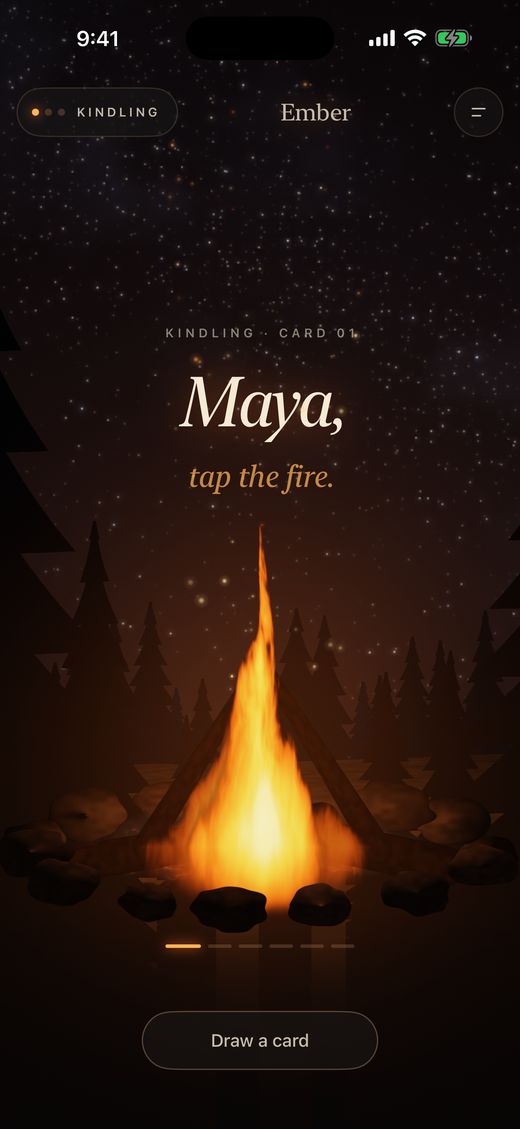
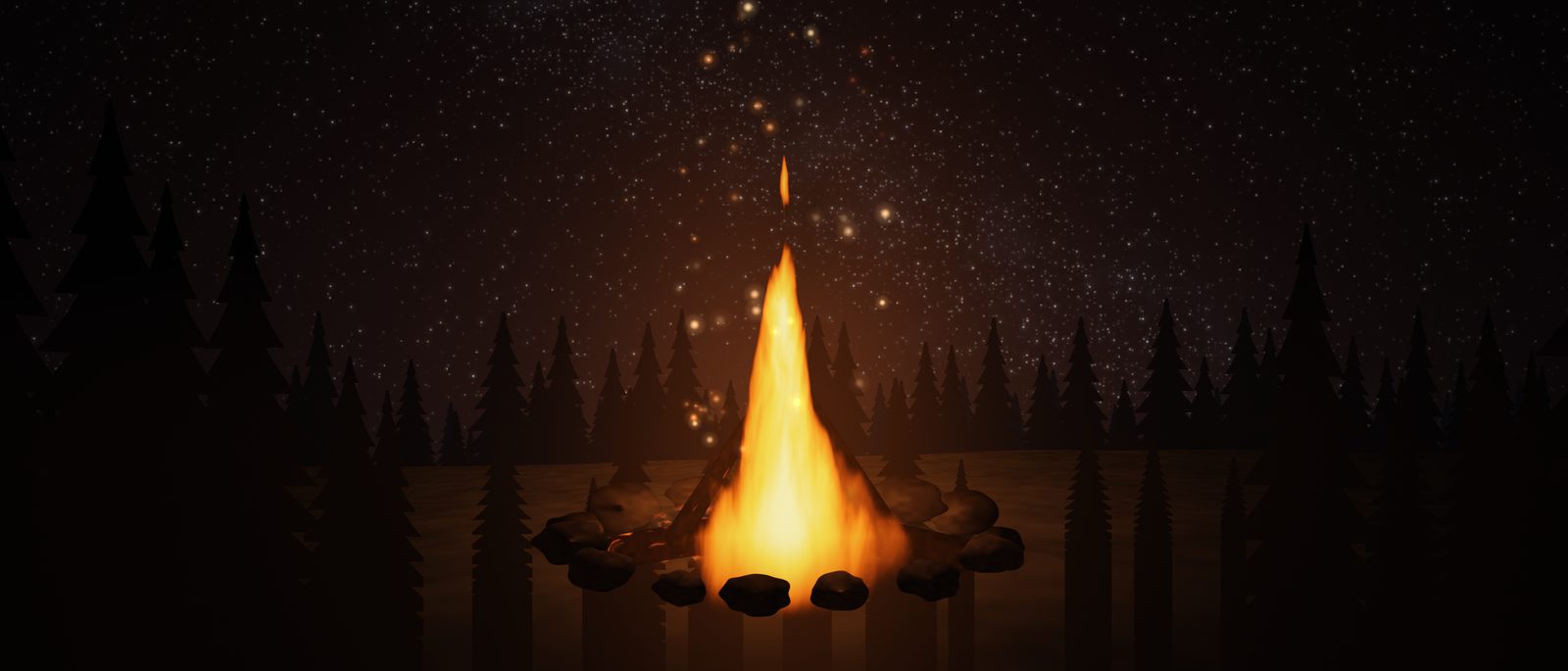
We were going camping with the neighbors and I wanted something better than a stack of conversation cards — honestly, I wanted my friends to be a little jealous. So Ember is a fire on your phone: a live, flickering campfire with sparks drifting up, and a deck of questions you pass around the circle.

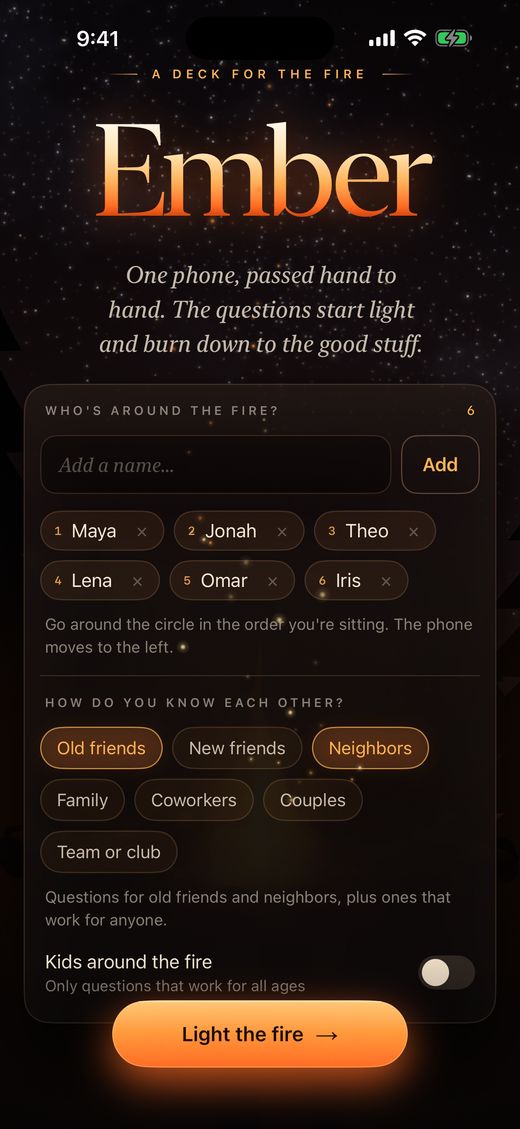
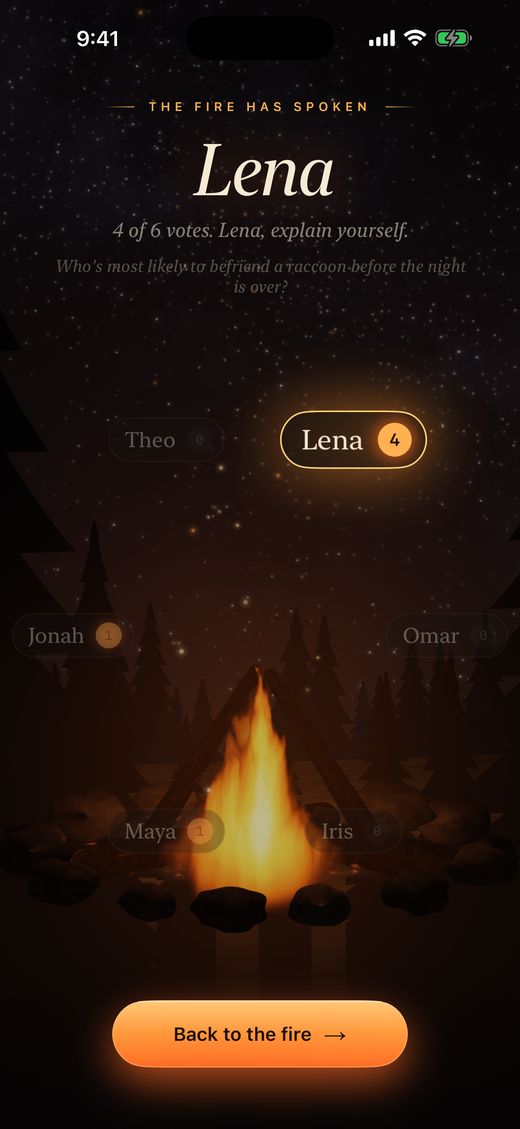
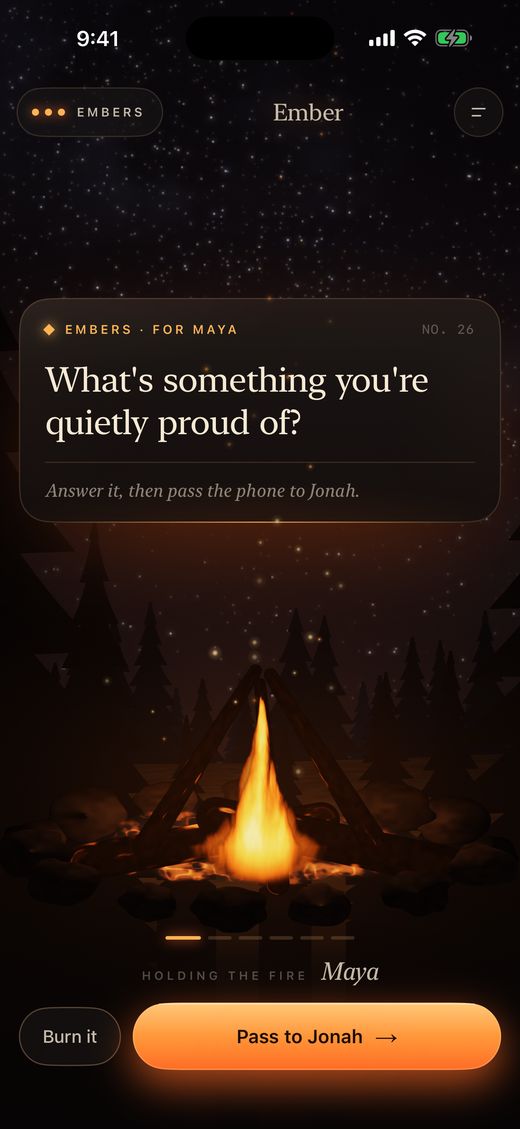
Everyone puts in their name and how you know each other — old friends, neighbors, coworkers, family — and the deck follows the night. It starts at Kindling (easy, funny), moves to Logs, and finishes at Embers, where the questions get quieter and better. Along the way: secret ballots the fire reveals, hot seats, and house rules that stick for the rest of the night.

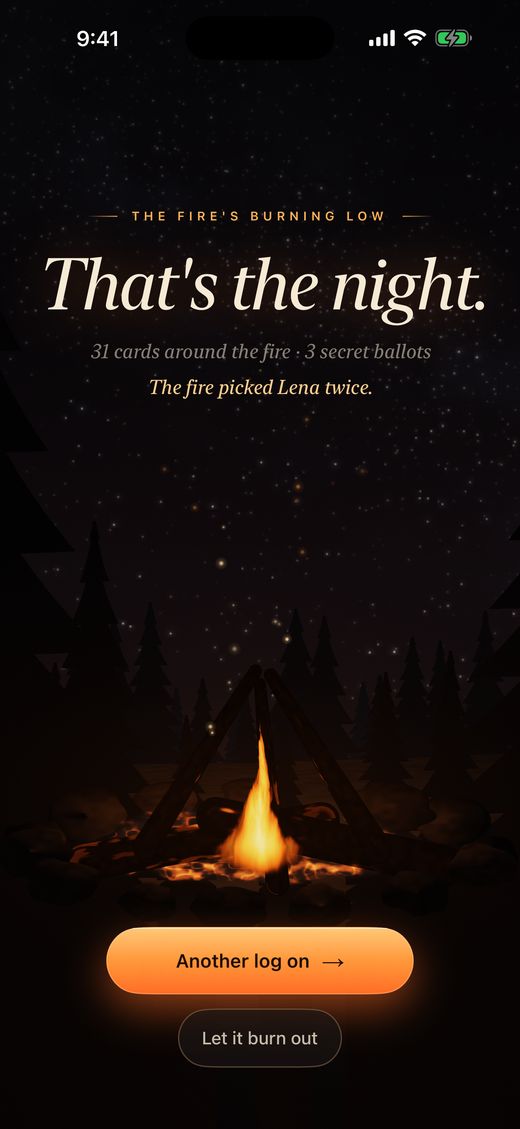
As the night goes on, the fire actually burns down. When the last card's played, it tells you how many cards went around, how many secret ballots, and who the fire picked most. Then you can throw on another log, or let it burn out.

The web version is free, one page, no account, works offline once it's loaded. That was the whole project — until I wondered what it would take to put something small in the App Store.

Ember setup: names around the fire and how everyone knows each other
Your turn: tap the fire to draw a card
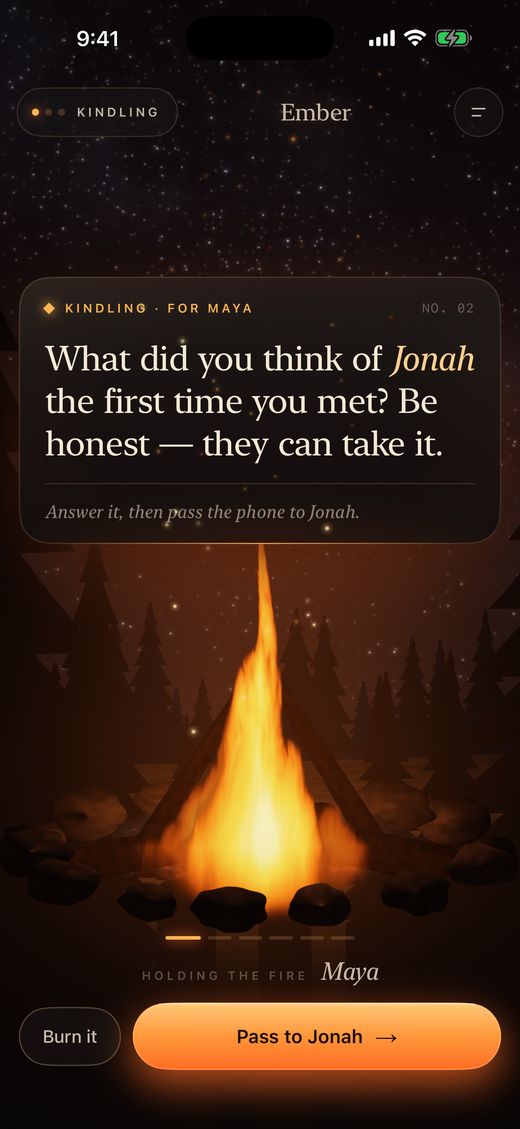
A Kindling card asking a question about the person next to you
The fire has spoken: a secret ballot revealed
An Embers card: What's something you're quietly proud of?
That's the night: the summary as the fire burns low
§ the app store, lightly

A small app is the cheapest way to learn the store.

The point wasn't to make money on a campfire. It was to learn the whole road with something I wouldn't mind getting wrong.

I've shipped software for twenty years and never sold any of it in an app store. Ember was the right size to find out: finished, loved by the people who'd used it, and small enough that every lesson would be about the store, not the app. So it went in as a proper native app — paid once, $2.99, no ads, no tracking, no data collected — rather than a website in a wrapper, because Apple turns those away.

Some of what I learned is paperwork you only meet by doing it: the paid-apps agreement, banking, tax forms. Some is geography: Ember isn't offered in the EU yet, because selling there as an individual means publishing a trader address, and a few countries need a games licence even for a deck of questions. Some is search: the store only reads your name, subtitle and keywords, so the name had to say campfire questions and very much not party game for couples.

And some is patience. A brand-new developer account gets a polite “Information Needed” before anyone looks at the app itself — a screen recording on a real device, and a handful of questions about what it does. Nothing was wrong; they just don't know you yet. It also teaches you that every new build goes back to the end of the line, so a cosmetic fix waits for the next real update. Spitball went in with those answers already written. That's what the small experiment was for.
§ play it

Find a fire. Pass the phone.

▲ live web app naveed.io/ember

Best on a phone, outside, after dark. Three or more around the fire is the sweet spot.

  1. Open naveed.io/ember and add everyone's name, in the order you're sitting.
  2. Pick how you know each other; it shapes the deck.
  3. Tap the fire to draw. Answer, then pass the phone to the left.
  4. Let it burn down to Embers. That's where the good ones are.

The iOS app — Ember: Questions That Heat Up — is in App Review now, for iPhone.

← prev case fileBurrow back to the top →Weave